Taliesin West
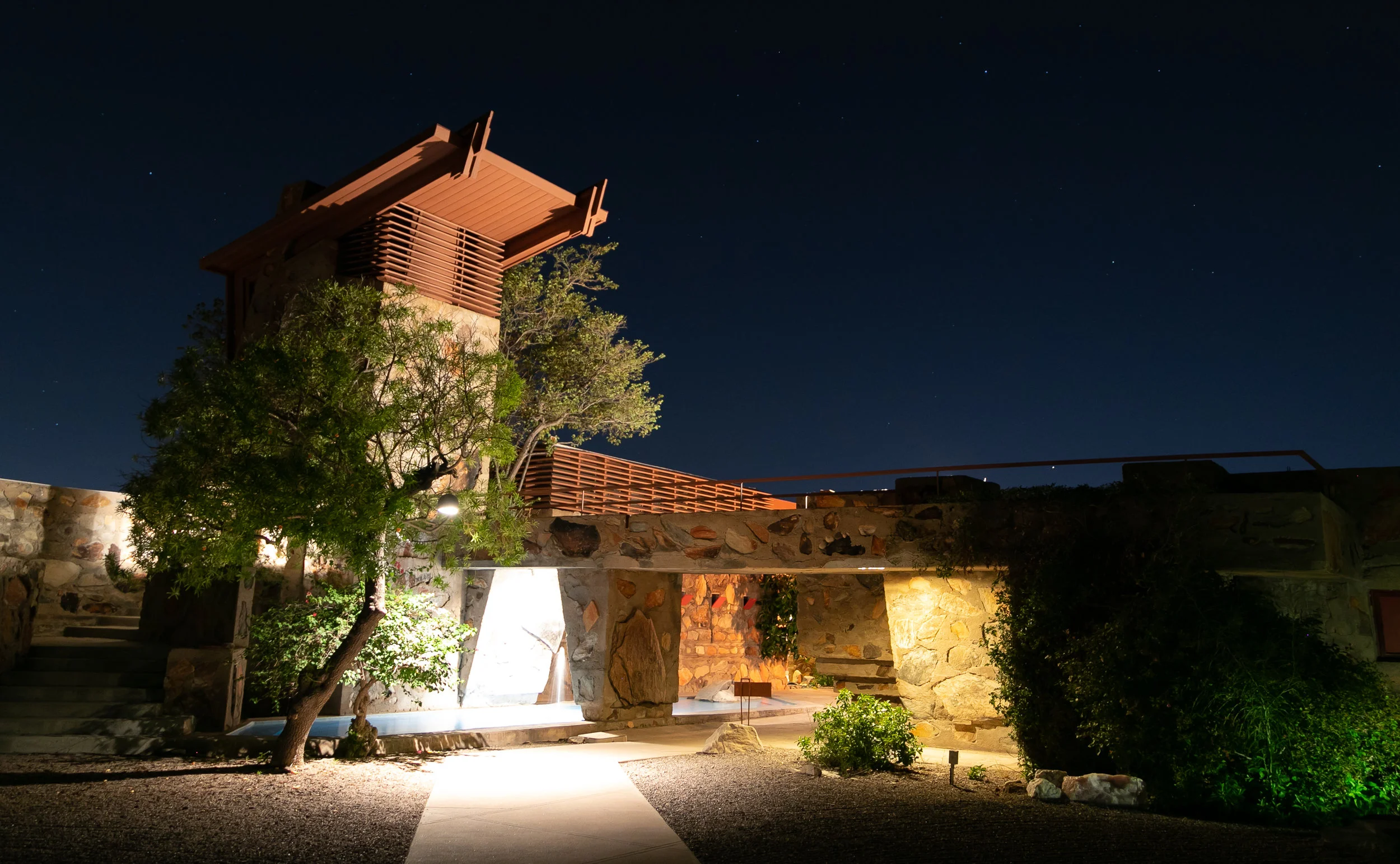
How to capture the energy, the connectedness that the patrons and employees feel, to put that into words is difficult. A collection of living spaces with circular doors and ceilings so low, guided tours wince as they enter. Walls pulled out of the ground, buildings that melt into the desert landscape, Taliesin West is charged with breathtaking emotion.
President and CEO of the Frank Lloyd Wright Foundation, Stuart Graff watches a line of quail head-bob their way along the warm ground. His office is on the edge of campus, near where Wright once lived. “With the desert masonry walls coming right out of the site, it’s almost like the ground has been folded up to create the walls…the place has a feel that’s certainly ancient, and yet modern all at once.”
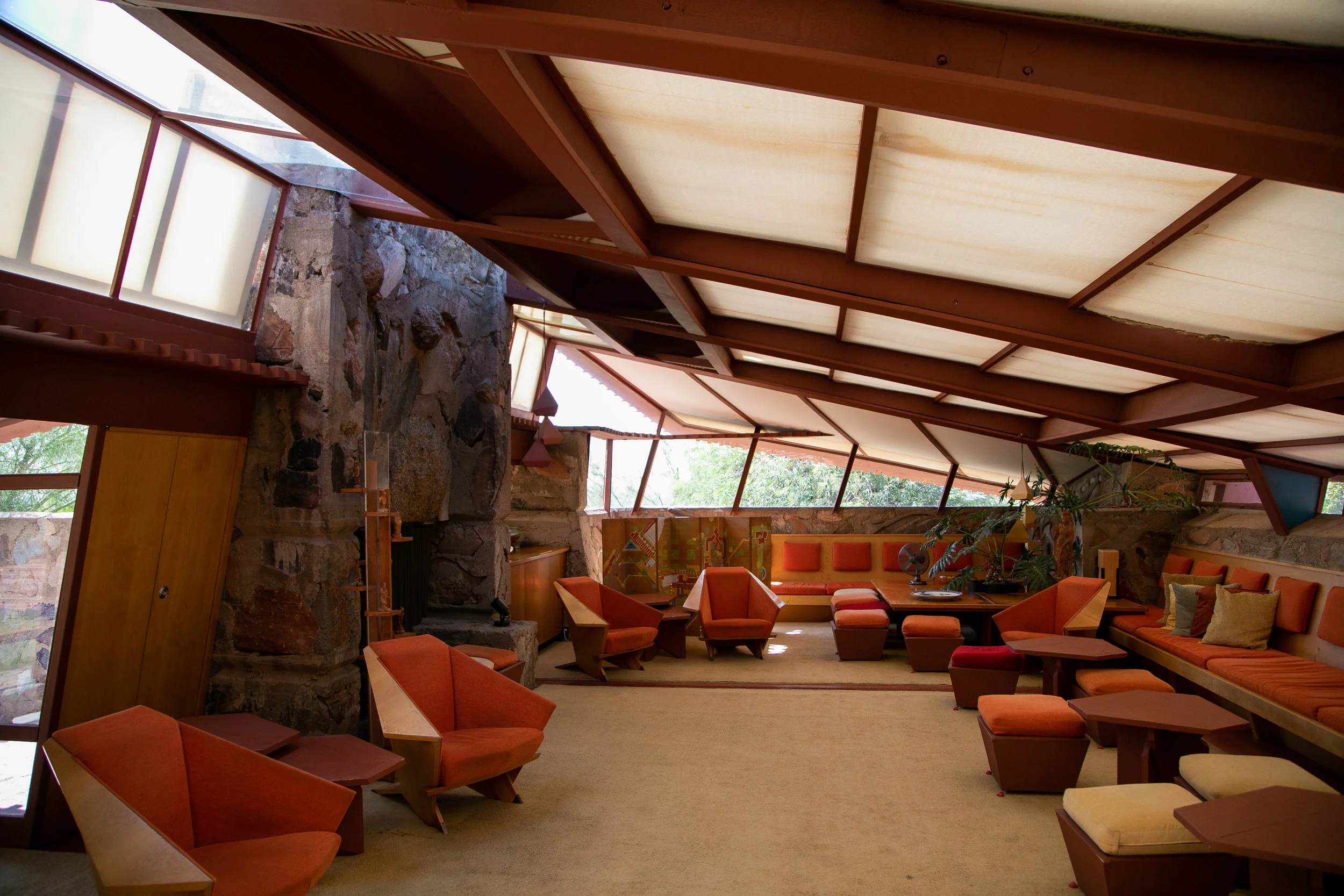
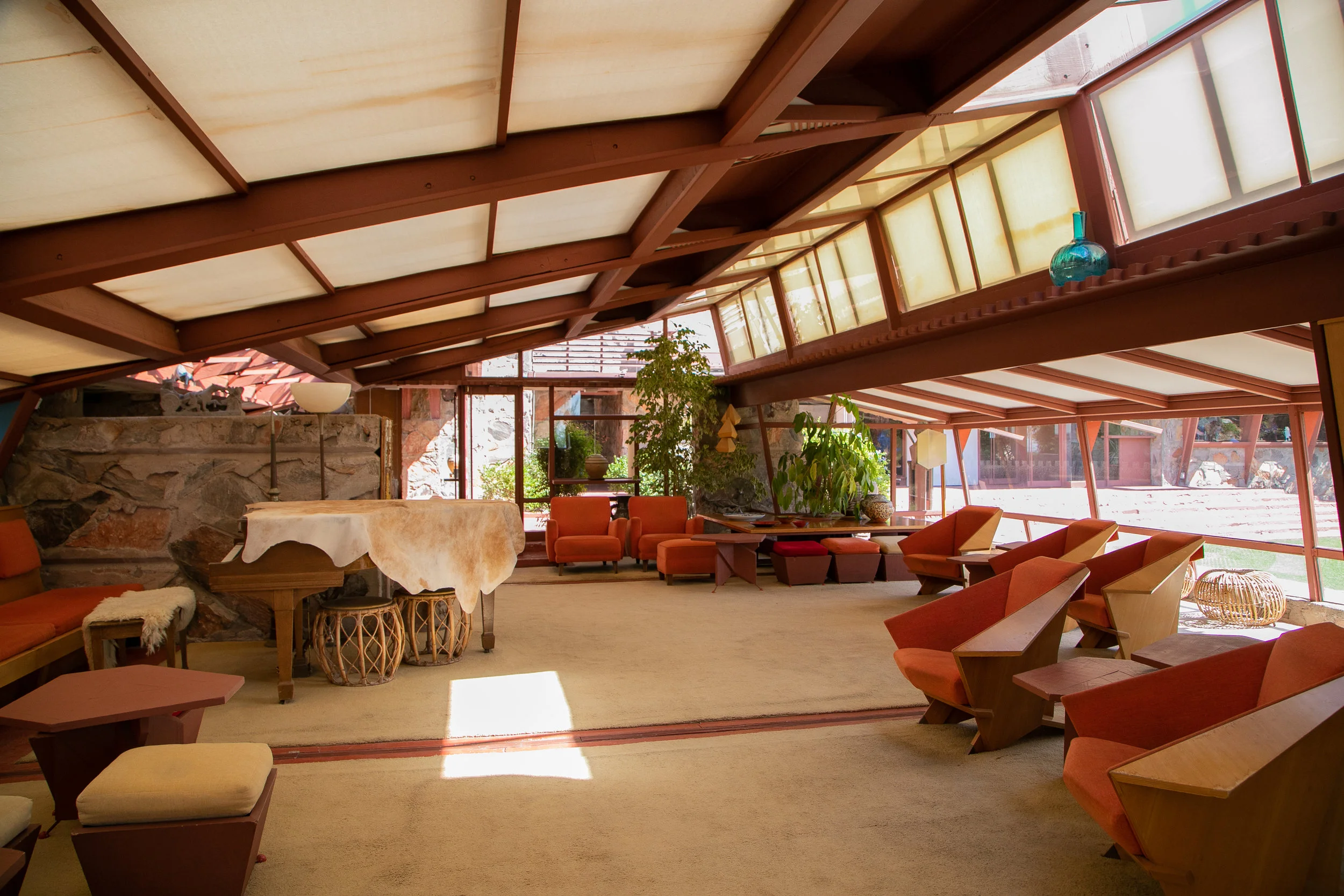
The fingerprints of Frank Lloyd Wright scatter the campus, accompanied by the influences of the many fellows and architecture students that have stayed. Sometimes falling asleep at their drafting tables, or in the many angular armchairs in Wright’s living room. An oasis at the base of desert hills, dried with time and the thirsty desert wind that flapped away the canvas roof when Frank Lloyd Wright first began construction.
When Stuart arrived at Taliesin West in 1981, he truly felt the isolation of the campus. There was no other development nearby, and the connection to the desert made him feel grounded in the environment. The connection to the earth, a feeling of repose.
“I found it very moving and contemplative.” Stuart’s eyes are far away, as he leans back in his chair. He used to roam the campus early in the morning, coffee cup in hand. There was no one else, just the house. “I was away from my spouse, who was still living in Chicago. I was immersed in this new environment, I could be overwhelmed…and yet, I was very much at peace.”
Taliesin remains locked in time, not trapped so much as reclining. Head thrown back, sunbathing in the Sonoran Desert with chic wayfarer sunglasses. When construction began in the late 1930’s, Wright wanted a fluid, breathing laboratory where architecture students and fellows could experiment with local building materials.
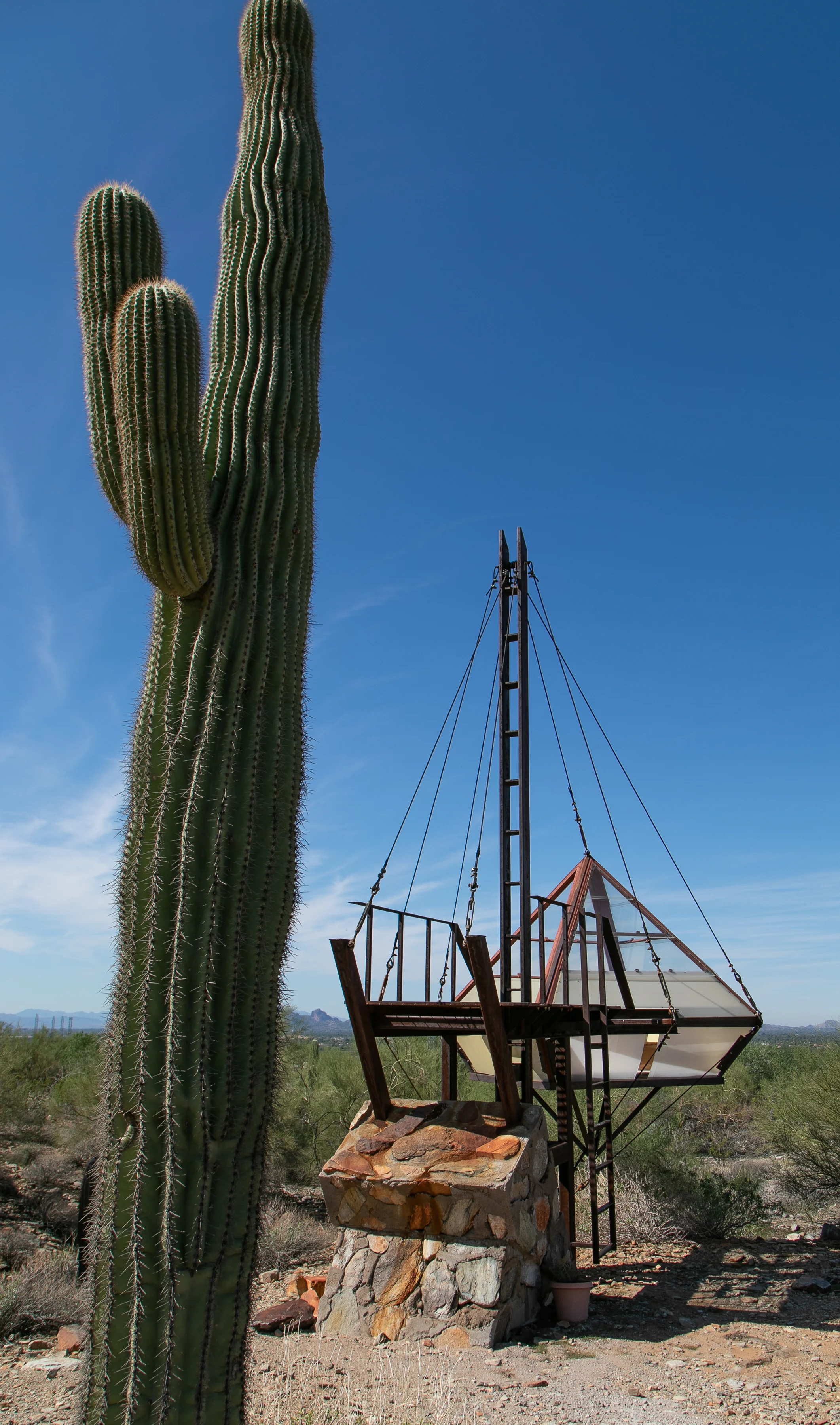
Standing on the prow, looking at the drafting room and the kitchen, there is a sense of “I belong.” The sun sets over the horizon, and the red wood ribs of the house creak as the air drops in temperature. If a wind picks up, the windows in the dining hall rattle.
Preservation Manager Emily Butler has been at Taliesin West for six months, after spending time at other Frank Lloyd Wright homes. She brings a more practical perspective, thinking critically about how to keep the campus in its most natural state.
“When you take a bunch of 20-somethings, and you build a national historic landmark,” Emily laughs, “We’re constantly finding things and scratching our heads and saying, ‘why did they put this here?’ or ‘why is this electric like this?’”
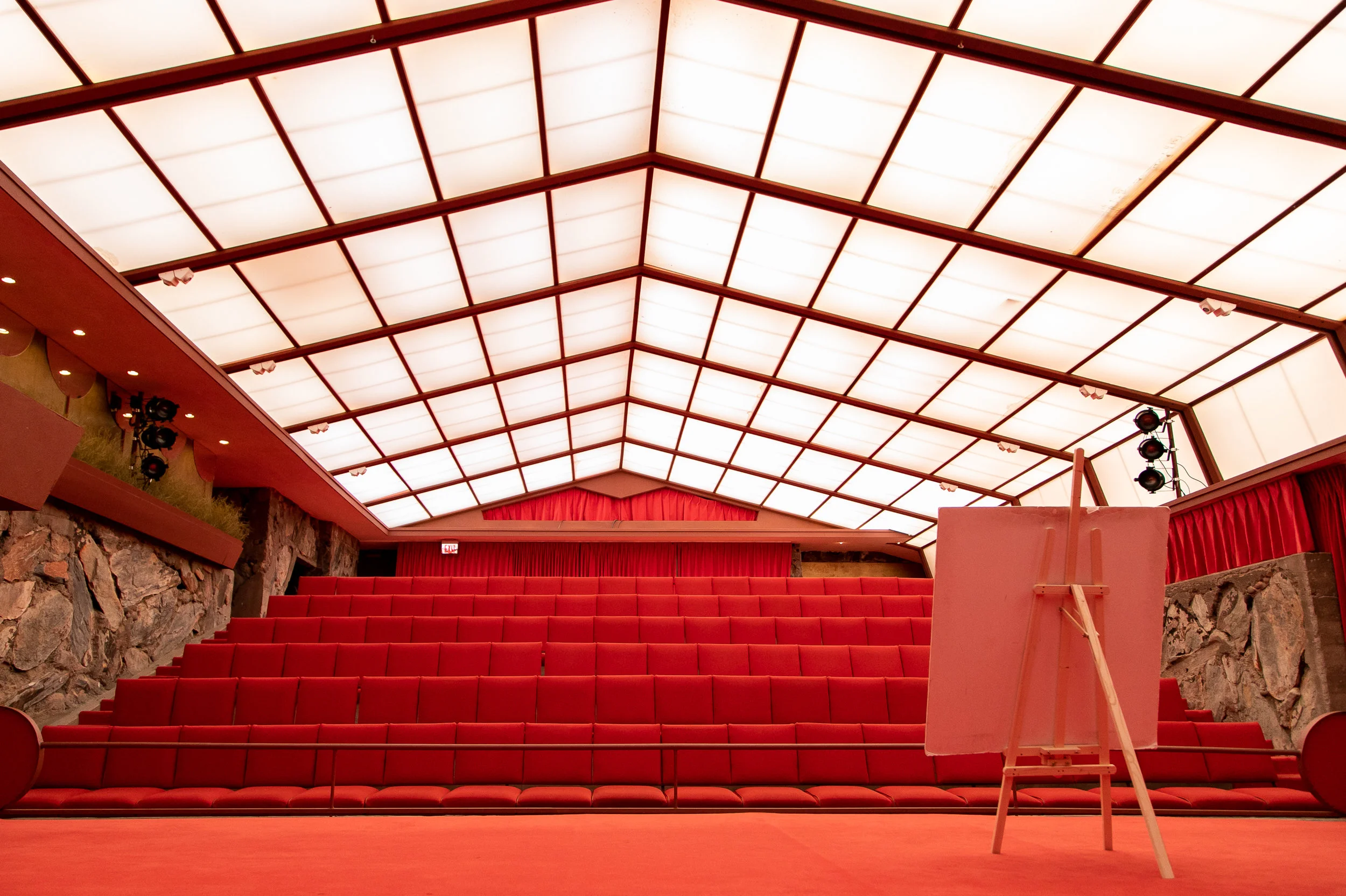
Even with the convoluted pattern of construction over the years, there is a unification among the campus. Angular and irregular doorways, flat roofs, a beat generation vibe. Wright may have seen the future in Taliesin West. “This hand of Wright, makes it quite different.” Elizabeth Dawsari, historian for the Frank Lloyd Wright Foundation says. “I’m not an urbanized person, there’s still something here– ‘Oh yeah, this is good. He should have done this.’ He didn’t violate it.”
Elizabeth has been at Taliesin since the 1980’s. She just forgot to leave. Every day on campus is like day one. “We’re accustomed to seeing everything bladed, and flat. Buildings plugged in, one after the other…That’s not the case here, these buildings are really suited to the land, in the way that other architecture in this area is not.”
As the sun dips below the lights of Scottsdale and the clear desert sky shifts from blue to orange to purple, Taliesin West shakes off the days’ tourists and the “I don’t want to pay $40 to see a house” people. The petals of the school fold in, the mood draws inside to the warm interiors.
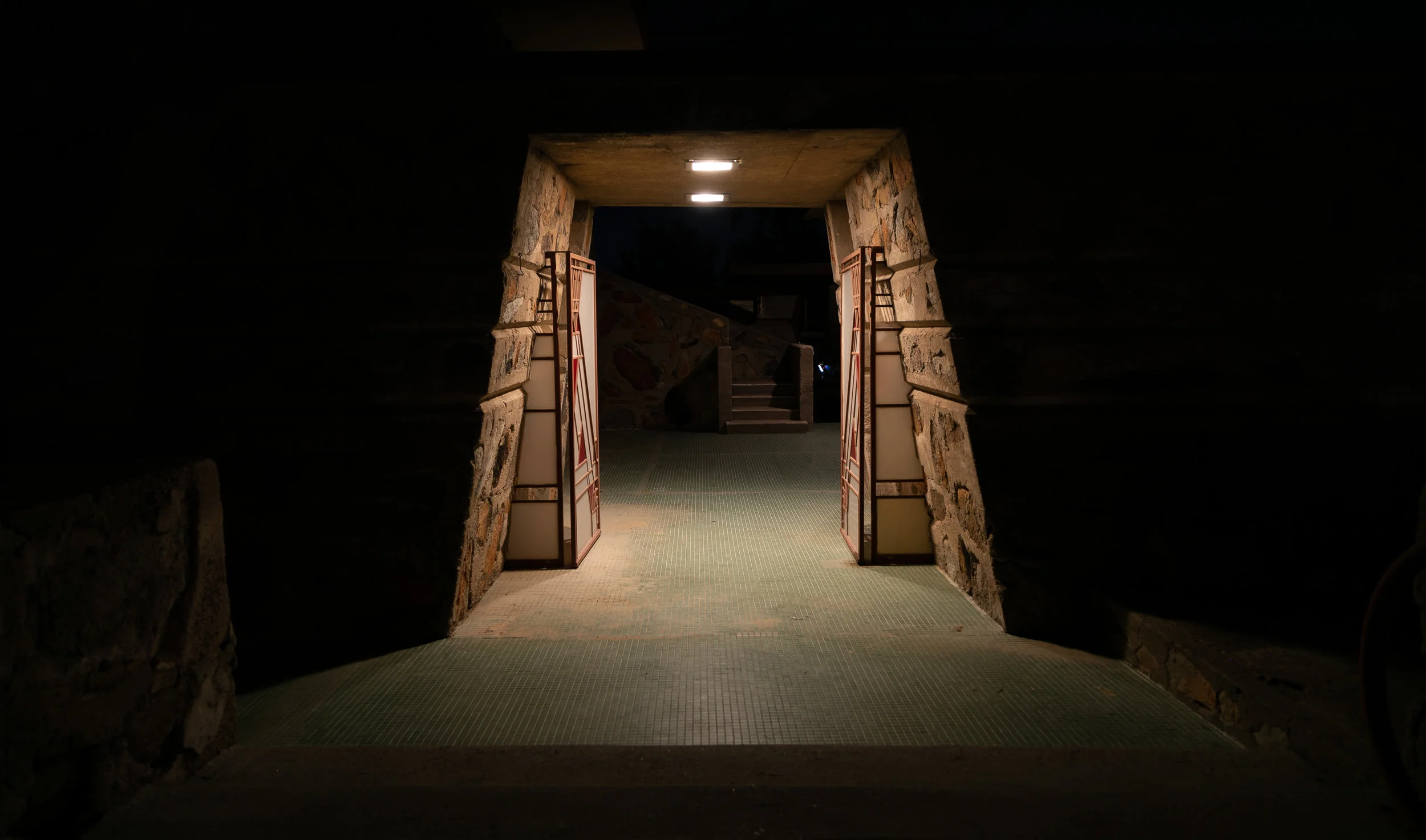
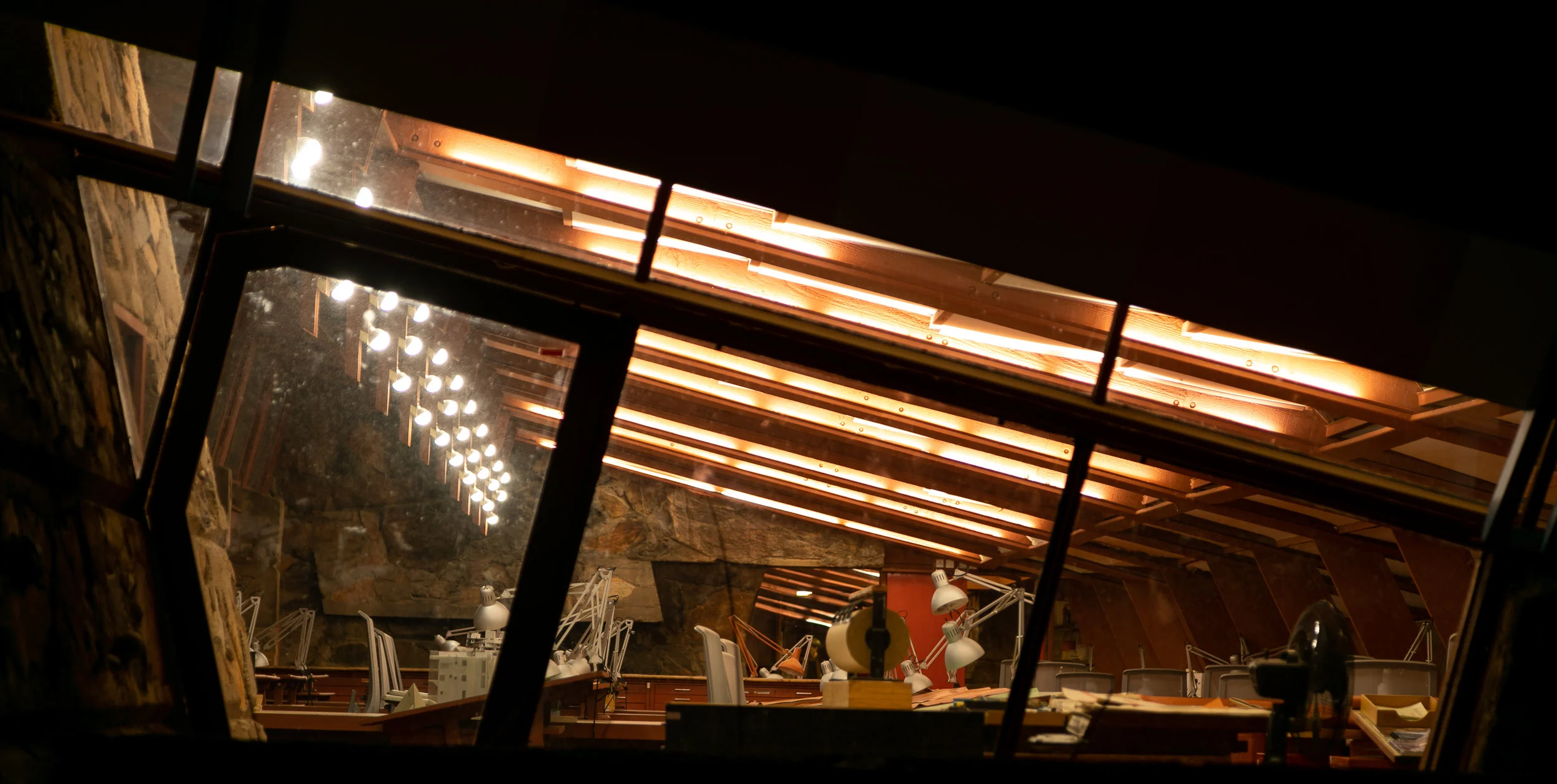
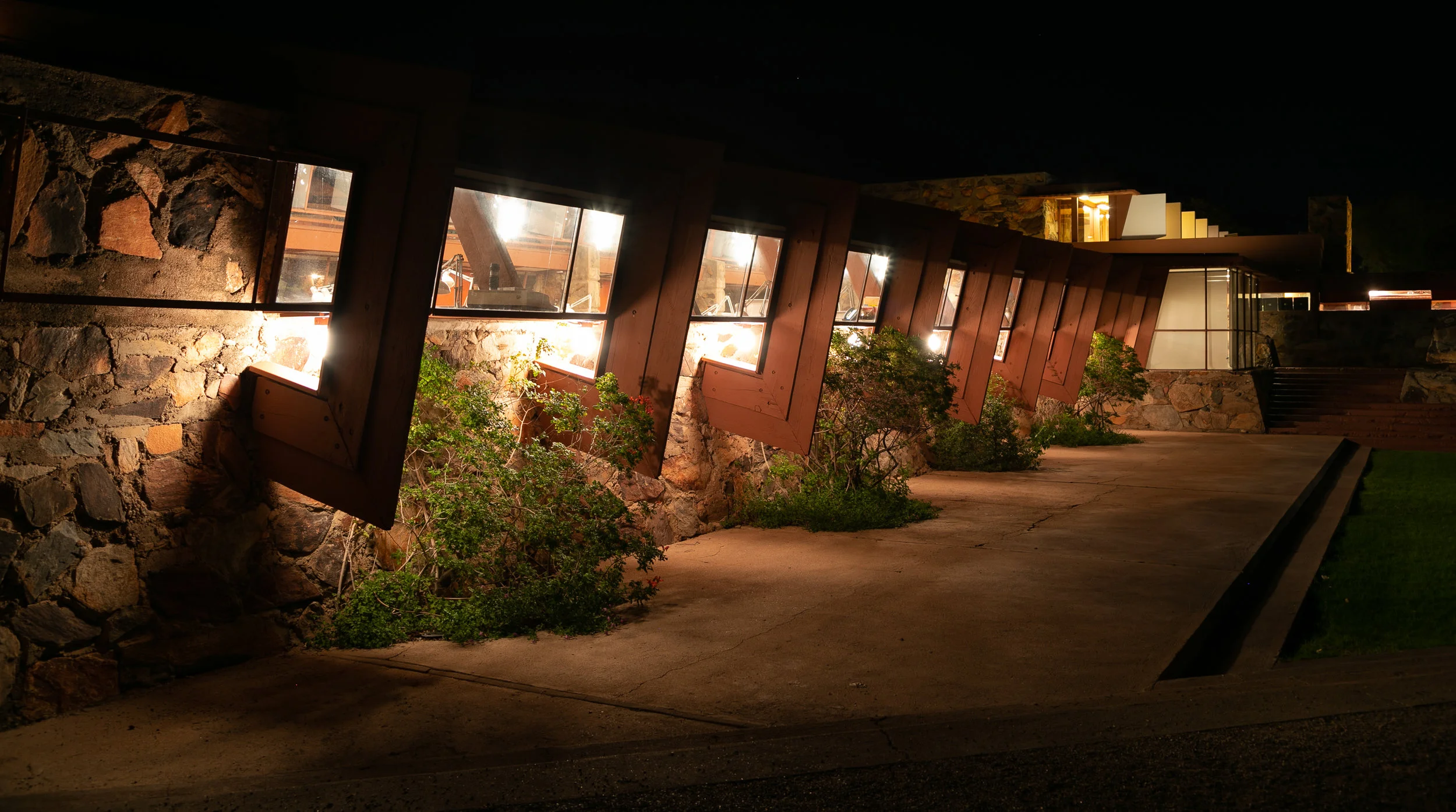
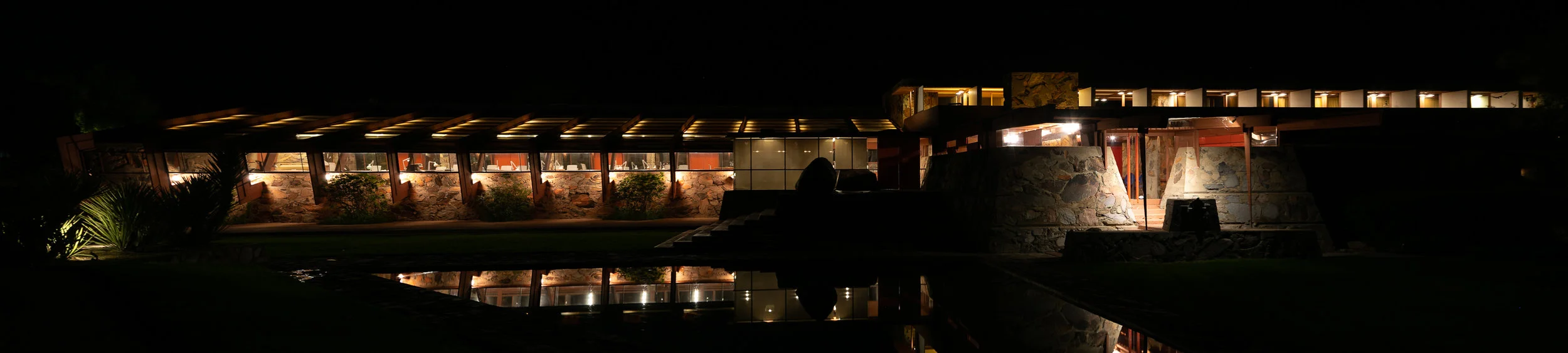
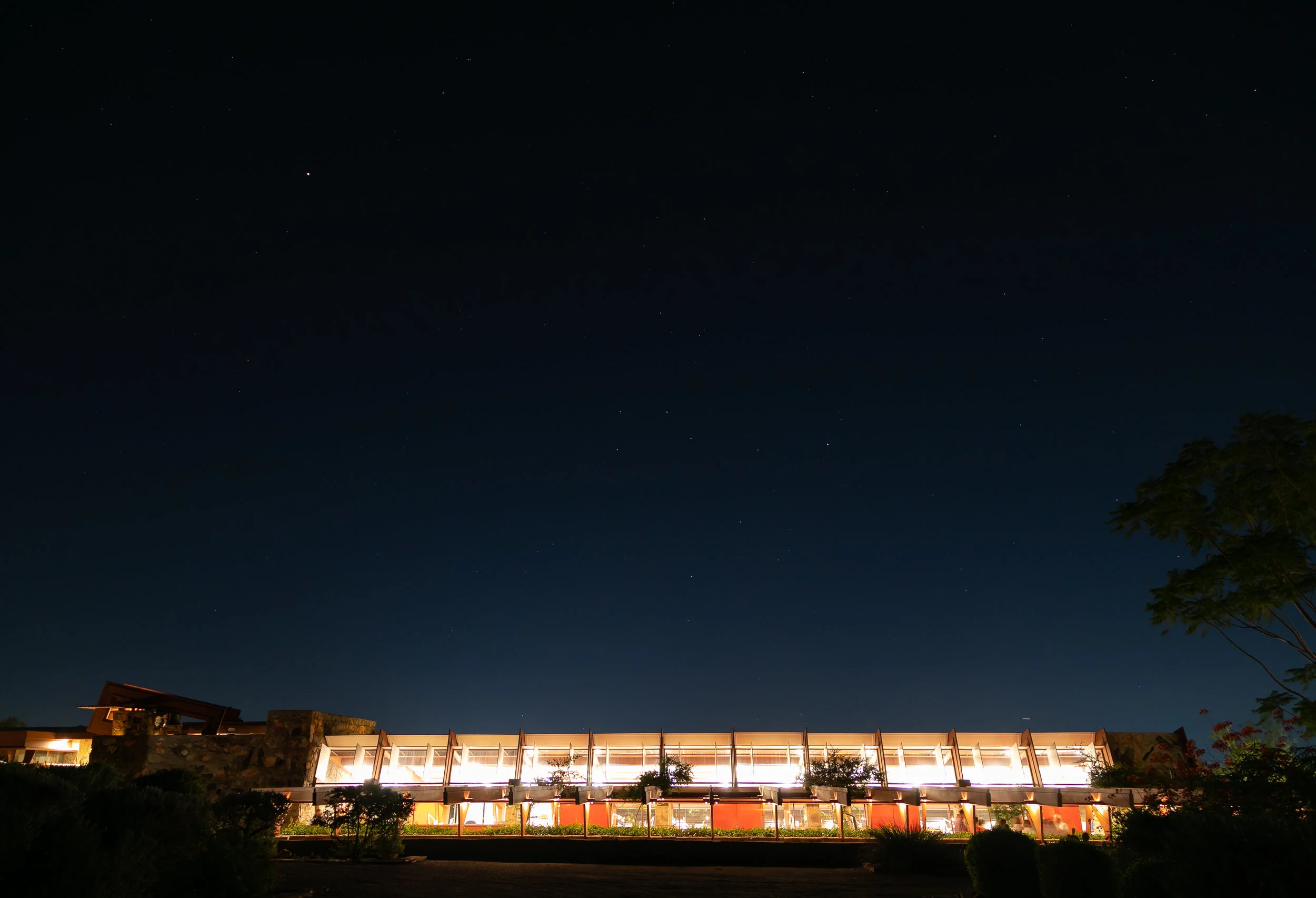
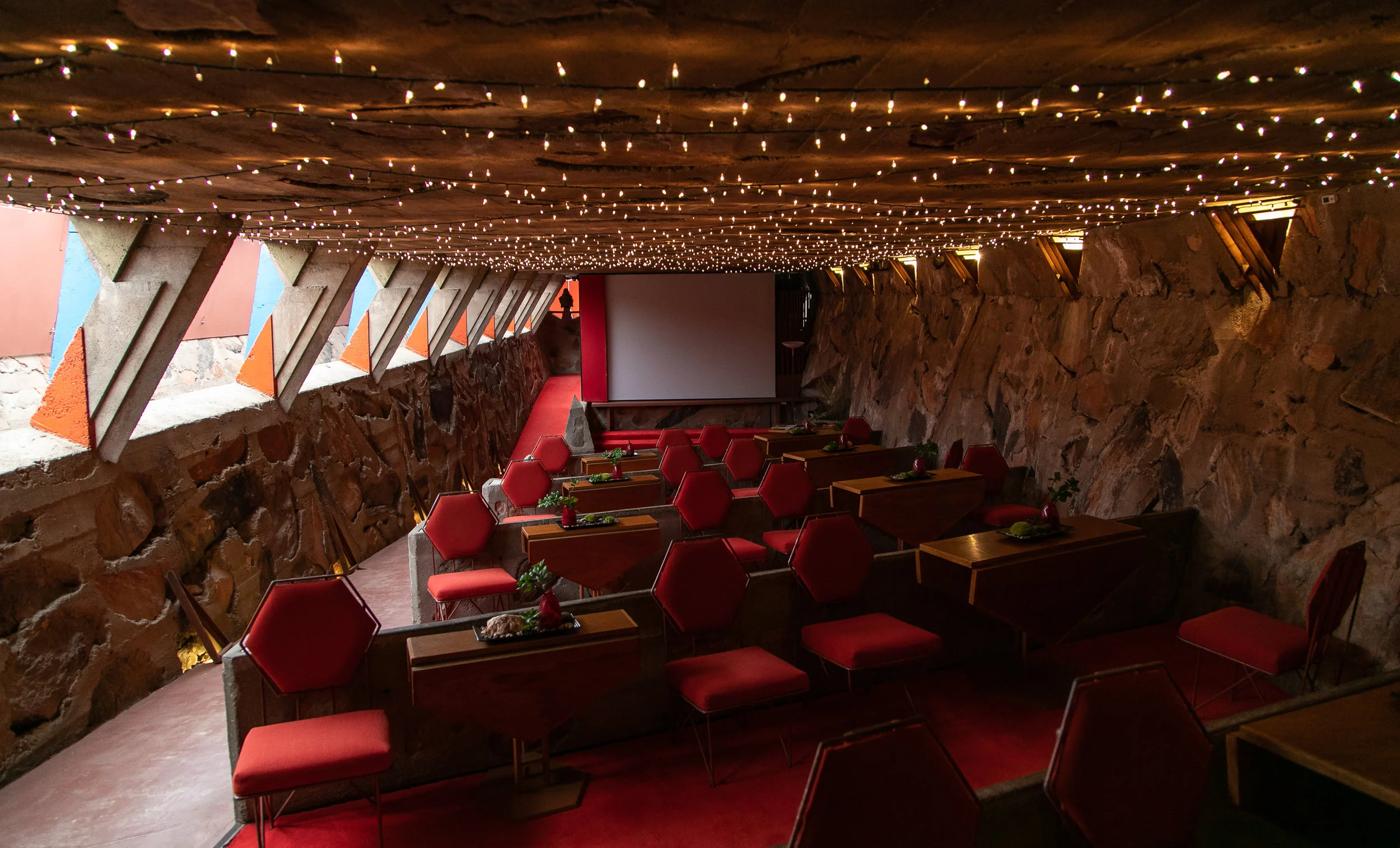
The campus lights flick on, triangles and trapezoids staggered and set into the stone walls. Modern fluorescent light spills out of the angular windows of the drafting room, onto the prow of the campus. The already dramatic buildings are intensified, their corners and slants exaggerated with shadow.
“Everything is reversed,” says Elizabeth. “The lights are coming from inside out…it’s quite romantic at night.”